EB Garamond Font Family - Download Free
The roman in EB Garamond is drawn directly from the Egenolff–Berner specimen of 1592, a single broadside that has anchored Western typography for over four centuries. Georg Mayr-Duffner started the digitisation in 2011 as an open-source revival of Claude Garamond's romans and Robert Granjon's italics, and the work was later carried forward by Octavio Pardo with a full family of five weights and matching italics.
The result is one of the few faithful Garamond interpretations available outside commercial libraries, a quiet, low-contrast old-style serif with a small x-height, generous capitals, and the slightly uneven rhythm that makes sixteenth-century type still feel alive on the page today.
EB GARAMOND Font Gallery
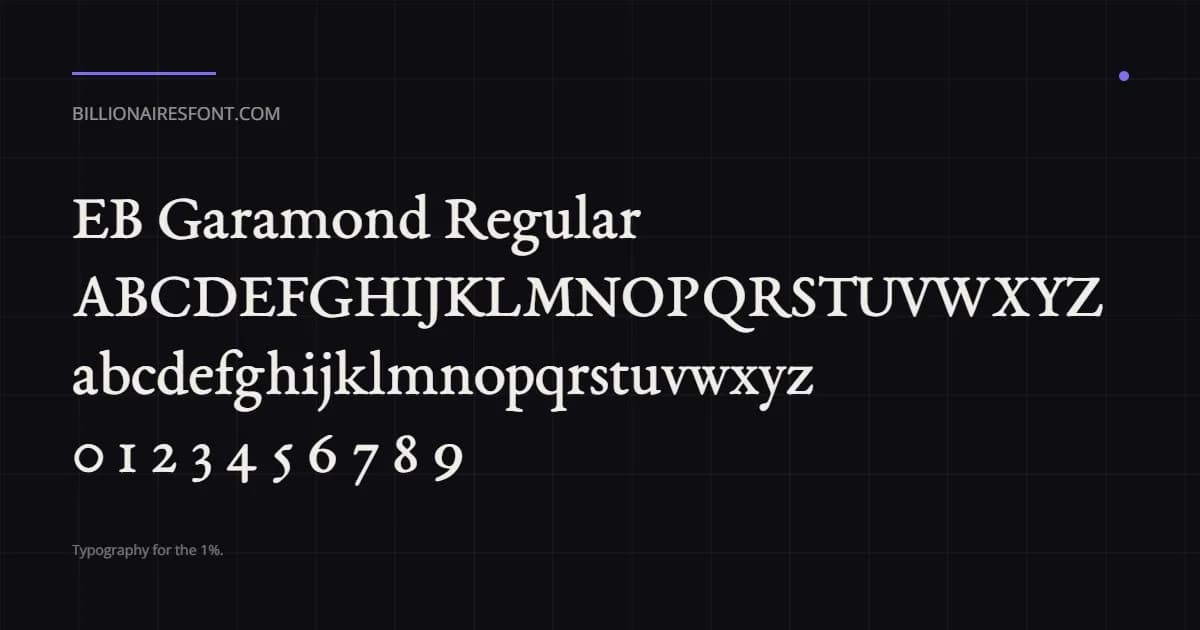
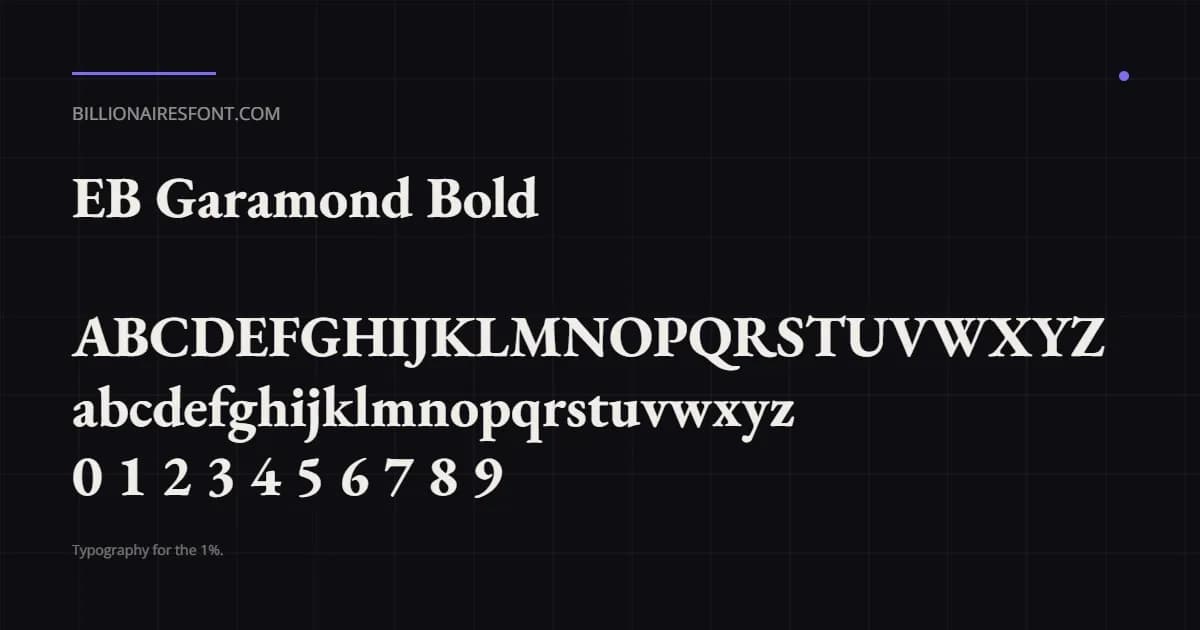
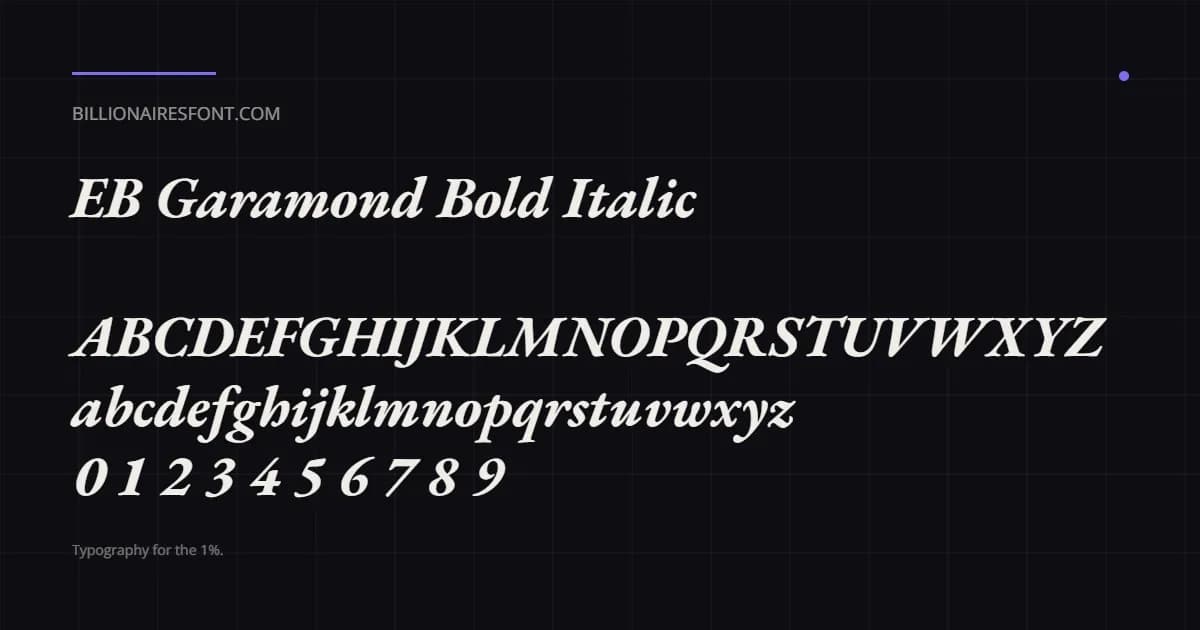
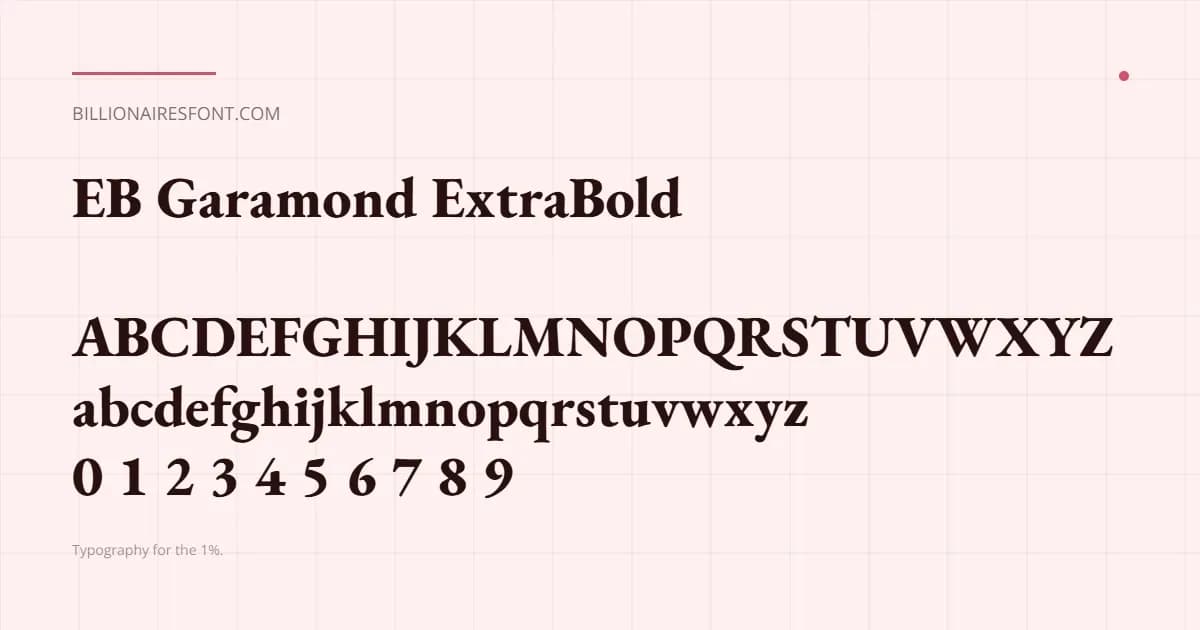
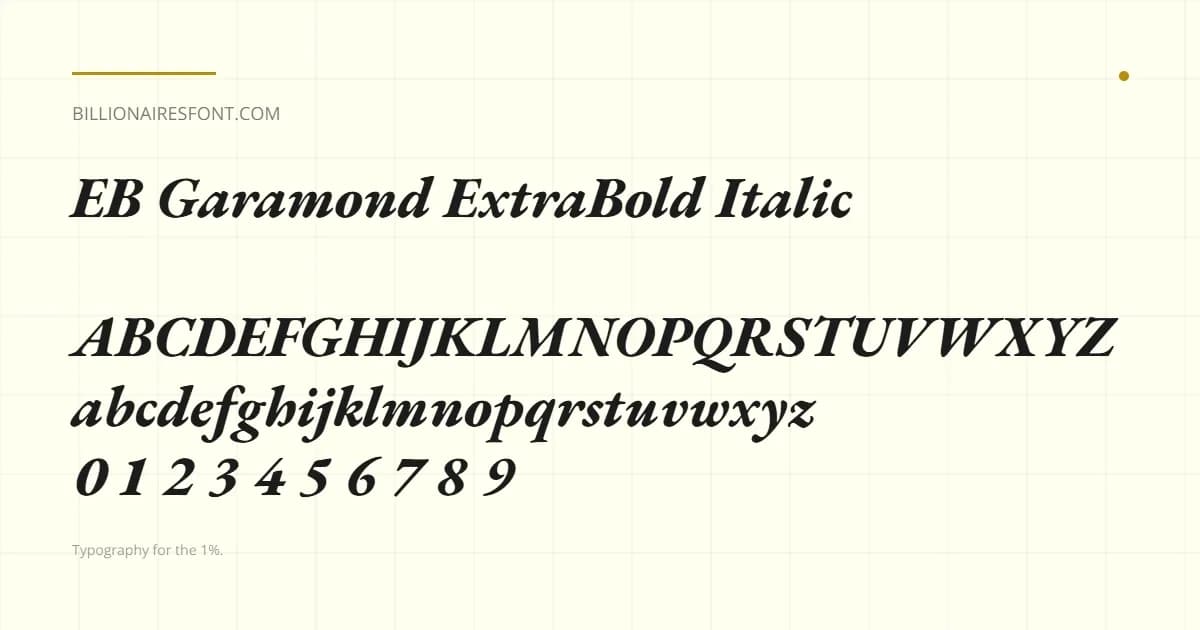
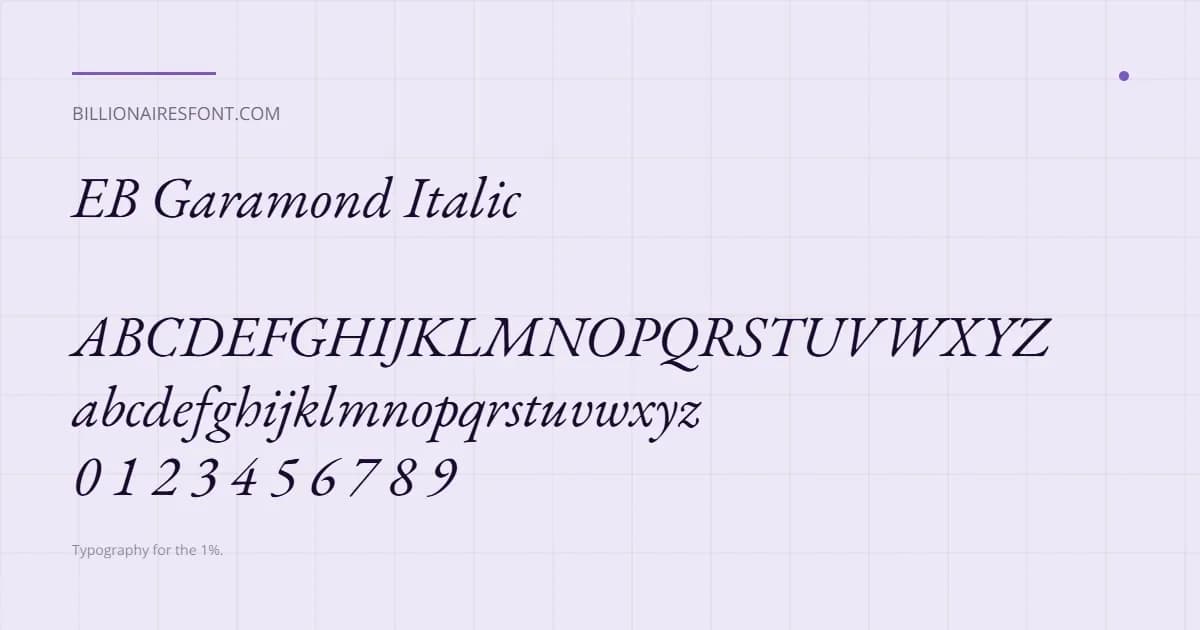
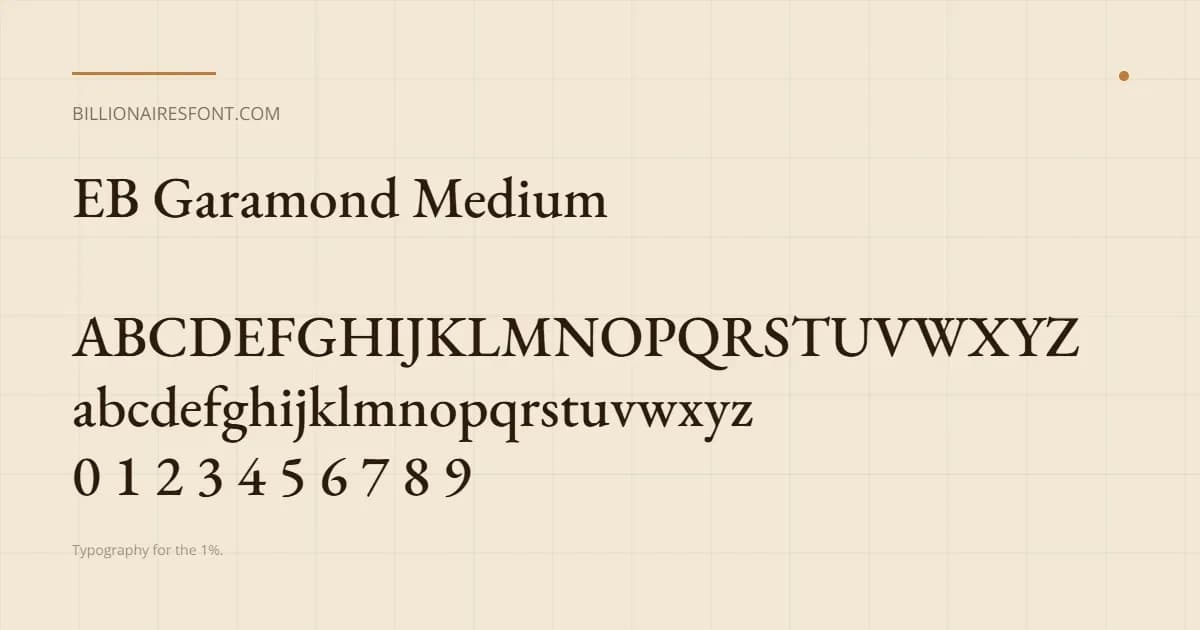
TEST EB GARAMOND LIVE
TEST EB GARAMOND 08 REGULAR LIVE
TEST EB GARAMOND BOLD LIVE
TEST EB GARAMOND BOLD ITALIC LIVE
TEST EB GARAMOND EXTRABOLD LIVE
TEST EB GARAMOND EXTRABOLD ITALIC LIVE
TEST EB GARAMOND ITALIC LIVE
TEST EB GARAMOND MEDIUM LIVE
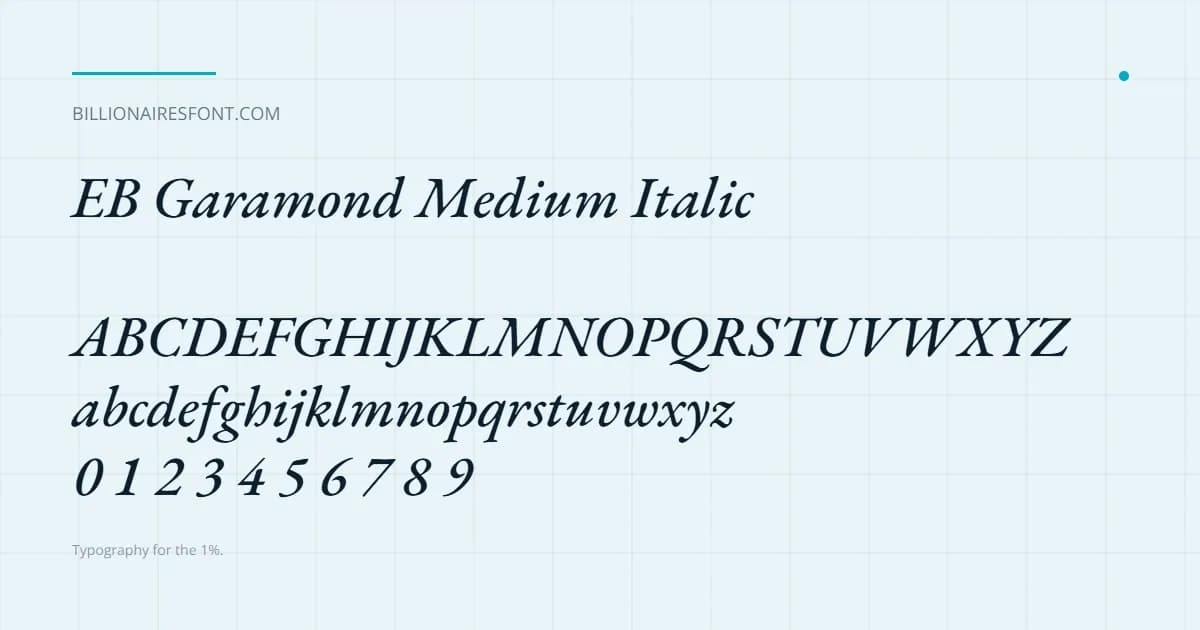
TEST EB GARAMOND MEDIUM ITALIC LIVE
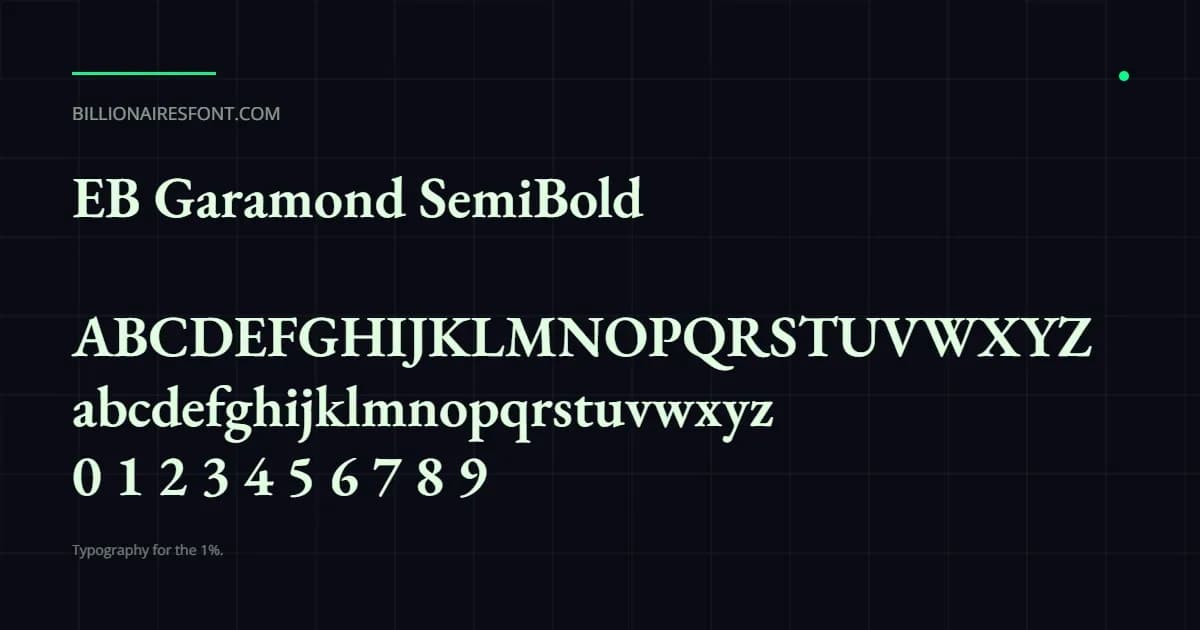
TEST EB GARAMOND SEMIBOLD LIVE
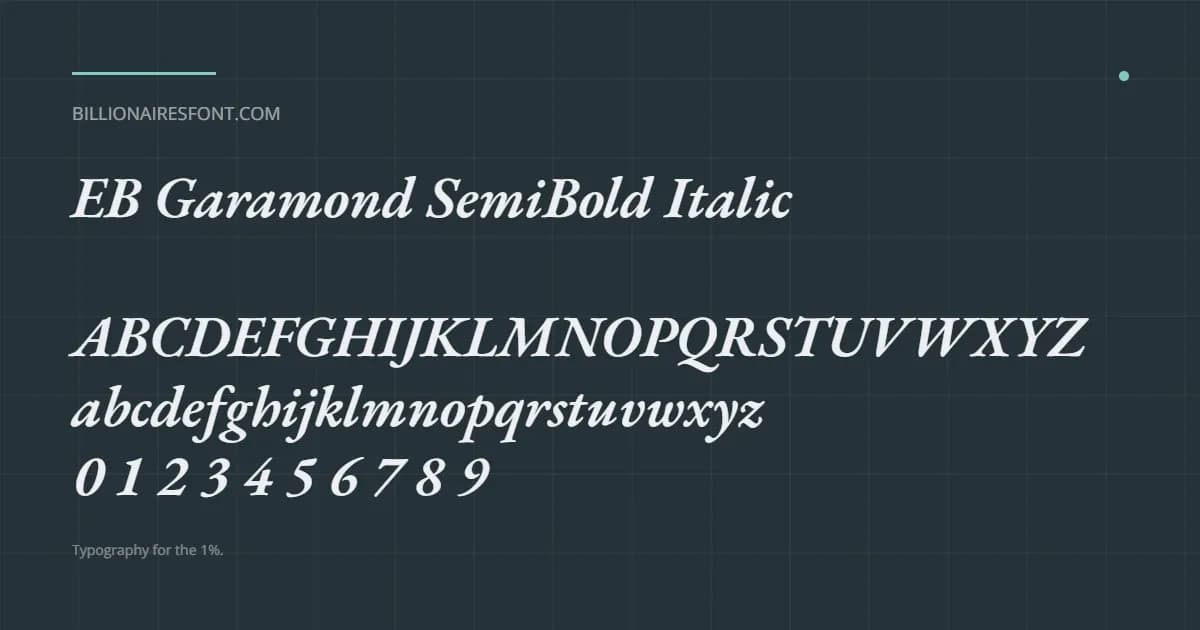
TEST EB GARAMOND SEMIBOLD ITALIC LIVE
EB Garamond in Available Styles
Character Map
eb garamond 08 regular character map
1 / 10
TECHNICAL SPECIFICATIONS OF EB GARAMOND
Download EB Garamond Font
The face's character sits in its proportions. The x-height comes in at roughly 62% of the cap height, a deliberately restrained ratio that throws weight onto the ascenders and gives long passages a vertical, almost architectural rhythm.
Lowercase counters stay open and round, terminals taper rather than chop, and the stress sits on a humanist diagonal axis carried over from broad-nib calligraphy .
A few letters do most of the personality work. The lowercase 'e' has a small, slightly tilted eye that catches the light at text sizes.
The 'a' carries a generous bowl with a short, soft tail. The capitals are noticeably narrower than the lowercase suggests, which keeps headlines tightly set without ever looking compressed.
At small sizes the type holds together as a colour; at display sizes the historical bones become visible - the slight irregularities, the soft joins, the unsymmetrical serifs that mark it as a revival rather than a reconstruction.
The 8pt cut is the optical size built specifically for body text - heavier strokes, slightly looser spacing, a touch more colour on the page, so it holds up at sizes where most digital Garamonds start to thin out.
Pairing and limits of EB Garamond Font
The face wants company. It pairs naturally with a neutral grotesque: Inter, Neue Haas Grotesk, or a workhorse like Suisse Int'l, where the serif holds the running text and the sans handles labels, decks, and UI.
Display work benefits from a heavier counterweight - a condensed gothic or a high-contrast display serif gives the page a hierarchy that EB Garamond alone cannot.
Limitations are honest. The 8pt master is a single regular weight without an italic, which restricts it to running text duties; the broader Pardo family is needed for layered hierarchy. The low contrast that makes it readable on screen also means it lacks the sharpness of a high-contrast didone for fashion or luxury display work.
As a UI face it sits awkwardly at small sizes below 14px on standard screens. Used inside its range: books, essays, identities with a literary lean, editorial web. It is one of the most considered free serifs in current circulation.